Paying Tk full, getting less fuel
Theft persists at pumps despite raids
 Symbolic Image
Motorists across the capital continue to be systematically shortchanged at filling stations through manipulated fuel dispensers, with recent government drives revealing shortages of over half a litre for every 10 litres purchased.
A recent inspection by the Bangladesh Standards and Testing Institution (BSTI) at Ms Pouro Filling Station in Sayedabad uncovered a deficit of 530 millilitres per 10 litres dispensed. The station was fined Tk 3 lakh.
However, officials and consumers say the practice is widespread and that sporadic raids and financial penalties have failed to curb the fraud.
“Our operations have revealed that fuel theft occurs at filling stations of all sizes across the capital,” BSTI Executive Magistrate Md Mahbubul Islam told this correspondent on Tuesday, noting that consumers have virtually no way to detect the tampering on-site.
Widespread Irregularities and Consumer Allegations
Complaints of short-measuring span across major Dhaka neighborhoods, including Badda, Rayer Bazar, Sayedabad, and Sat Rasta. In some instances, consumers allege losing up to a full litre per 10-litre purchase.
Ashraful Islam, a bank employee in Rayer Bazar, noted that discrepancies between his fuel purchases and vehicle mileage led him to suspect significant shortages. "When I tried to buy fuel in two 5-litre containers to verify the quantity, the station employees flatly refused," he said.
The financial toll is particularly severe for long-distance commercial transport operators. A bus purchasing 200 litres of fuel at the shortage rate detected in Sayedabad loses more than 10.6 litres per transaction.
Alamgir Mia, a driver for Hanif Paribahan, pointed out that long-distance buses typically refuel at night when regular regulatory oversight is virtually absent, leaving drivers powerless against suspected shortages.
High-Tech Manipulation Techniques
According to officials from the Directorate of National Consumer Rights Protection (DNCRP), filling stations employ multiple sophisticated tactics to deceive customers:
Electronic Chips & Microcircuits: Dispensing equipment is fitted with hidden electronic chips or remote-controlled circuits that override normal measurement controls, forcing the display meter to register full volume while delivering less fuel.
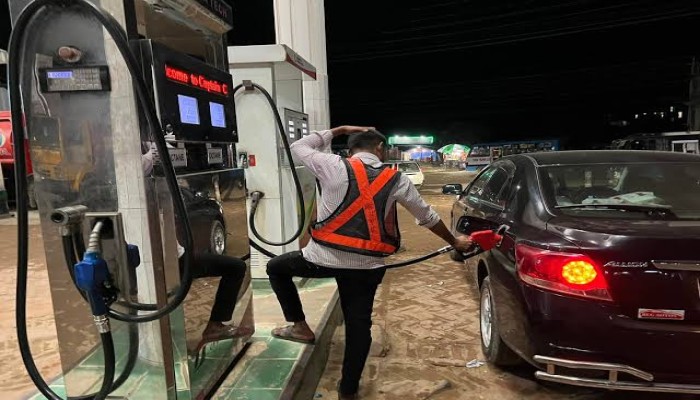
Nozzle Manipulation: Pump attendants repeatedly squeeze and release the nozzle lever during refueling, interrupting the fuel flow while the meter keeps running.
Flow-Speed Alteration & Adulteration: Operators adjust dispensing speeds or dilute higher-grade fuel with cheaper chemical substances.
Despite previous enforcement actions and fines ranging from Tk 50,000 to Tk 3 lakh against several establishments—including Mecca Filling Station in Badda and City Filling Station at Sat Rasta—offences remain widespread.
Calls for Stricter Penalties and Structural Reform
Stakeholders argue that light fines serve as little more than an operational expense for dishonest operators.
Prominent energy expert Prof Dr M Shamsul Alam emphasized that periodic raids and monetary fines are insufficient deterrents. "Authorities must institute criminal prosecutions and permanently cancel the operating licenses of filling stations found guilty of deliberate fuel theft and adulteration," he urged.
Meanwhile, Bangladesh Petrol Pump Owners Association President Mohammad Nazmul Haque acknowledged the persistence of fuel theft and called for stronger, coordinated regulatory action.
“We have repeatedly informed the government about these irregularities. BSTI is conducting raids, but they have failed to eradicate the practice,” Haque said, adding that trade associations need to be actively involved in regulatory compliance committees to achieve lasting results.
Until regulatory oversight transitions from sporadic raids to continuous monitoring and strict license revocations, consumers in Dhaka will continue to pay for fuel they never receive.

 Symbolic Image